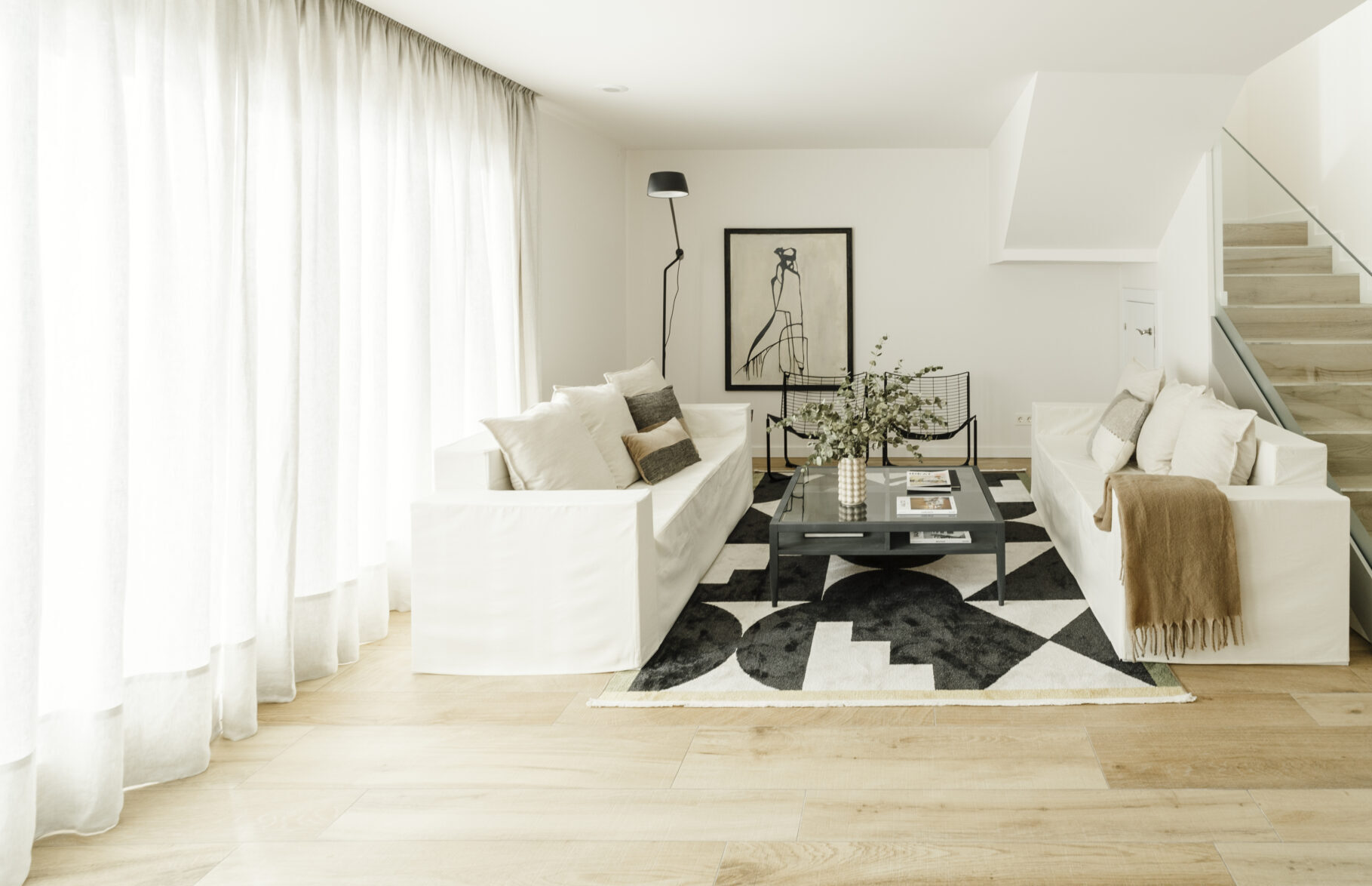
One of the biggest fears when you're starting out is furniture. Where do you get it? Where do you keep it? How much do you need before you can take your first job?
Good news: a lot less than you think. And buying too much, too soon, is one of the fastest ways to sink a new staging business. Here's how I'd build an inventory step by step, without risking money you don't have.
Start with the pieces that change the photos
Big furniture is expensive, heavy and hard to store. Small pieces are cheap, easy to carry and make a huge difference in listing photos. That's where I'd start:
- Bedding: white or neutral duvet covers, extra pillows, a throw at the foot of the bed.
- Cushions and throws in two or three colors that go with almost anything.
- Rugs to define spaces and warm up empty rooms.
- Lamps. Light is everything in photos.
- Mirrors to bounce light and make small rooms feel bigger.
- Plants (real or good quality fake), art, books, trays, vases and towels.
With a kit like this, you can transform an occupied home and handle most partial refreshes.
Use what's already in the home
In occupied homes, half the job is editing. Take things out, move furniture around, change which room each piece lives in. You'll be surprised how often the right sofa is already there, just in the wrong spot.
Rent the big pieces at first
For vacant homes, rent sofas, beds and dining sets until you know which pieces you use again and again. Pass the rental cost through in your quote. It keeps your risk low while you learn what works in your market.
When you buy, buy smart
- Neutral and timeless. Light sofas, wood, natural textures. Pieces that work in almost any home.
- Secondhand first. Marketplaces, estate sales and moving sales are full of great pieces.
- Light and easy to move. You'll carry everything more times than you can count.
- Durable. Removable, washable covers save you a lot of headaches.
- Scaled for real homes. Slightly smaller pieces make rooms look bigger.
Think of your inventory as an investment
Every piece you buy should pay for itself over several projects. That's why it makes sense to charge a monthly rate for your own inventory in every quote. Keep a simple list of what you have, what you paid and which projects it's been on. After a few months you'll see clearly which pieces earn their place and which ones just take up space.
A rule I like: only buy a big piece when you've needed it (and rented it) at least two or three times. Let your projects tell you what to buy.
Storage and moving
At first, a spare room or a small storage unit is enough. Label boxes by room (bedroom kit, living room kit, kitchen kit) so packing for a job takes minutes, not hours. And always include moving and labor in your price. It's real work.
Keep it organized
A shared spreadsheet with photos, sizes, colors and where each piece is right now will save you hours when you're planning a project. You don't need special software to start.
Want to know how to include all this in your prices? Read how much to charge for home staging. And inside my home staging course I share how I organize, store and move my own inventory.